Golf in Japan: What to Expect and Why It's Worth It
A lunch break at the turn, a hot bath after the 18th, a caddie to help with the greens. Here is what a round in Japan is often like — and why so many visitors want to play one.
Updated October 2026
The short answer
Visitors can play golf at many courses in Japan, and a round is often a full-day experience rather than a quick 18. Depending on where you play, it can include a sit-down lunch between the two nines, an optional soak in the clubhouse bath, a caddie for your group and, near Mt Fuji, views of the mountain. Caddie availability, playing format and visitor rules vary by course, region and date, so check them when you book directly with a course or through a tee-time reservation service.
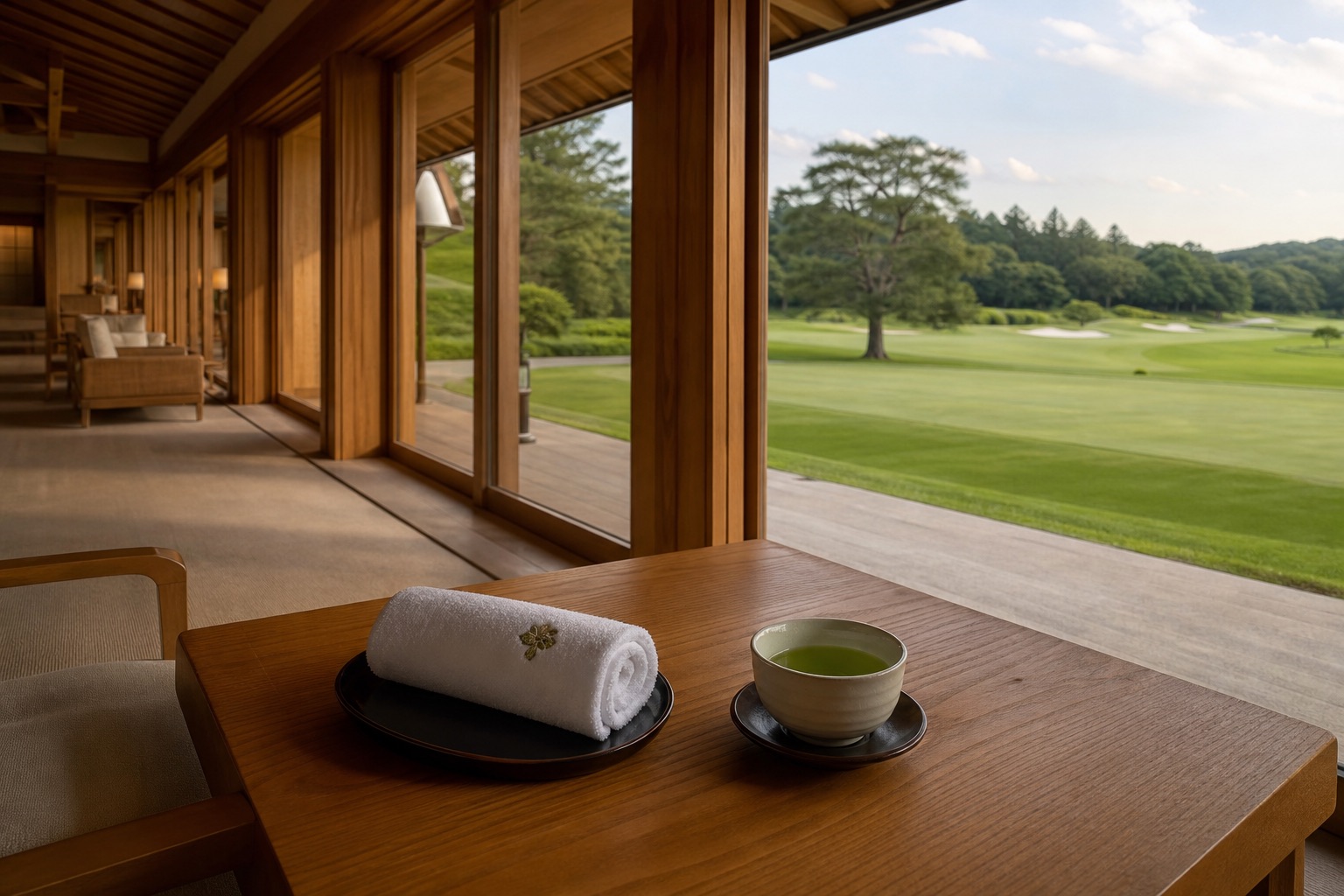
Visitors can play golf at many courses in Japan, and a round here is often more than just 18 holes. At many courses it is a full day: you arrive, change in a locker room, play nine holes, sit down for lunch, play the second nine, then, if you like, soak in the clubhouse bath before you leave. Add a caddie for your group at courses that offer one, carefully kept fairways and, near Mt Fuji on a clear day, the mountain on the horizon, and it becomes a round many visitors talk about for years.
Every course is different, and caddie availability, playing formats and visitor rules vary by course, region and date. Here is what you can expect at many of them.
This guide explains what is different, what to expect on the day, where to play, and how it compares with golf abroad. The videos below show it better than words can.
Where to play golf in Japan
Most visitors play near where they are already staying:
- Around Tokyo: Chiba, Saitama and Kanagawa have dozens of courses within about an hour or two of the city, from historic championship venues such as Narashino Country Club to relaxed everyday courses. See golf in Tokyo.
- Mt Fuji and Hakone: Courses around Gotemba, Lake Kawaguchi and Hakone are known for views of the mountain. See Mt Fuji golf.
- Kyoto and Osaka: Courses around Lake Biwa and the hills outside Osaka fit easily into a Kansai trip. See golf in Kyoto and Osaka.
- Hokkaido and Okinawa: Cooler summer golf in Hokkaido, and year-round resort golf in Okinawa. See Hokkaido golf and golf in Okinawa.
Availability for visitors is checked course by course and date by date.
What is golf in Japan like?
The PGA TOUR’s short film on Japanese golf culture is a good place to start. Filmed in 2024, it features Narashino Country Club, which hosted the PGA TOUR’s ZOZO CHAMPIONSHIP, and the streets of Tokyo, and shows how the game fits into Japanese life.
Video: PGA TOUR, "A Change of Course: Japan" (2024, 24 min) — a feel for Japan's golf culture, on and off the course.
What first-time visitors often notice:
- At many courses, the day has a rhythm. You check in at the front desk, get a locker, play nine holes, break for lunch, then play the second nine at a set start time.
- Service is part of the round. From staff who take your bag at the entrance to caddies on the course, you are usually looked after from arrival to departure.
- Courses are kept with care. Many courses take pride in neat fairways, raked bunkers and well-kept greens.
- There is often a bath. Many clubhouses have a large communal bath you can use after your round, and some use natural hot-spring (onsen) water.
Is golf popular in Japan?
Very. Japan has about 2,000 golf courses, and golf has long been part of business and social life. Major tournaments are shown on national television, and Japanese players compete at the top level of the men’s and women’s tours. Japan also has a PGA TOUR event: the ZOZO CHAMPIONSHIP was played at Narashino Country Club in Chiba, and since 2025 the event has been the Baycurrent Classic at Yokohama Country Club.
Golf is also part of everyday city life. Multi-storey driving ranges with floodlights are a familiar sight in Tokyo, where many golfers practise after work. If you want to warm up before your round, see our guide to driving ranges and simulators in Tokyo.
Video: まひろGOLF (2026, 21 sec) — a Japanese golfer on a 100-day challenge to break 100, practising under the floodlights after dark, with apartment blocks behind the nets.
How a round works: check-in, lunch break and the bath
This short video from Japan Guide walks through the process of playing a round in Japan, from arrival to finish.
Video: Japan Guide, "How to Play Golf in Japan" (2018, 8 min) — the steps of a typical round, from check-in to finish. As the channel notes, clubhouse dress codes have relaxed since it was filmed; check your course's current rules.
The lunch break between nines
At many courses, the two nines are separate sessions. After nine holes you walk into the clubhouse restaurant for a sit-down lunch, usually about an hour depending on the day’s schedule, and start the second nine at a time the course gives you. Menus usually include Japanese favourites such as Japanese curry, ramen or a set meal, and many golfers enjoy a beer. Some courses also offer through play (18 holes without a long break); it is common in Hokkaido and Okinawa. If you prefer it, ask when you book.
The bath after your round
After the 18th, where there is a bath, many golfers head straight to it. It is usually a large shared bath, separated by gender, with showers where you wash before you get in. Some clubhouses use natural hot-spring water, which is a real treat after a long day. Towels and toiletries are usually provided. If you have tattoos, read our guide on tattoos and golf in Japan before you go.
Small customs you may notice
- Dress code in the clubhouse. Some traditional clubs ask for a collared shirt or jacket when you arrive. See our dress code and etiquette guide.
- Hole-in-one tradition. In Japan, a hole-in-one often means celebrating with your playing partners, and some golfers even buy hole-in-one insurance to cover the cost.
- Carts. Many courses use riding carts that follow a fixed path, with your clubs on the back and the group riding together.
Caddies, carts and clubhouse service
Caddies are one of the things visitors remember most. At courses that offer them, a caddie usually looks after a group of up to four players, helps with club selection and reading the greens, and looks after the cart. Most caddies speak Japanese, so ask in advance if you need English. Random Golf Club’s video from Narita Golf Club shows one example.
Video: Random Golf Club (2019, 13 min) — an example of a round with a caddie at Narita Golf Club, Chiba.
Not every course offers caddies, and many visitors play without a caddie, using a riding cart. For how caddie fees work and how to request one, see our guide to caddies in Japan.
Course conditioning and the two-green system
Standing on the tee at many older Japanese courses, you will see something unusual: two greens side by side, one with the flag and one resting. Traditionally one was planted with a grass suited to summer and the other with a grass suited to cooler months, so the course could stay playable all year; today, some courses use the same grass on both. On the day, only one green is in use; the flag shows which one. If the unused green interferes with your ball, stance or swing, the Rules of Golf (Rule 13.1f) require you to take free relief, dropping within one club-length of the nearest point of complete relief, no nearer the hole.
Course presentation is a point of pride at many clubs, and the clubhouse staff will often greet you at the bag drop and have your clubs on a cart before you have parked.
Mt Fuji views, seasons and night golf
Few things say “Japan” like teeing off with Mt Fuji in the background. Courses around Gotemba, Lake Kawaguchi and Hakone are known for it. This 4K film from Fuji Golf Course, opened in 1935, gives a feel for it.
Video: Daren Lim Golf (2023, 18 min) — what playing at the foot of Mt Fuji looks like.
Clear views of the mountain are more common in the cooler, drier months; in summer it is often hidden in cloud. Spring brings cherry blossom and autumn brings red and gold leaves, and both are popular times to play. See our Mt Fuji golf guide and best season to golf in Japan for courses and timing.
Some courses also offer night golf under floodlights in the warmer months, which can be a fun way to fit in a round after a day of sightseeing. Availability varies, so ask in advance.
Golf in Japan vs the US, UK and Australia
Every course and country is different, but these are the general differences visitors often notice.
| Japan (typical) | US, UK and Australia (typical) | |
|---|---|---|
| Pace of the day | At many courses: nine holes, sit-down lunch, then the second nine | 18 holes straight through, with a quick stop at the turn |
| After the round | Communal bath in many clubhouses | Shower and a drink at the bar |
| Caddies | Offered at many courses; one caddie typically serves the group | Mainly at high-end or resort courses |
| Carts | Riding carts on a set path, shared by the group | Two-seat carts or walking, depending on the course |
| Greens | Two greens per hole at many older courses | One green per hole |
| Booking | Online booking is common but mostly in Japanese; visitor rules vary by course | Online booking in English is common |
Is it worth playing golf in Japan?
If you enjoy golf and want an experience you cannot get at home, it is well worth building a round into your trip. You get time to enjoy lunch with your group, staff who, at many clubs, look after you from the bag drop to the bath, and settings that can be spectacular.
A few things to plan for:
- Booking. Visitor rules, group-size rules and availability vary by course and date, and many courses take reservations in Japanese. See how to book golf in Japan and can tourists play golf in Japan?.
- Cost. Green fees vary widely by course, season and day of the week. See our breakdown of the cost of golf in Japan.
- Getting there. Many courses are outside the city. See getting to golf courses in Japan.
- Playing alone. Single players are welcome at some courses on some days. See solo golf in Japan.
Golf Caddie Japan arranges tee-time requests at golf courses across Japan for visiting golfers, in English. Tell us your dates and where you are staying, and we will recommend courses that suit your location and preferences and handle the communication with the course in Japanese. Our service fee is ¥6,000 per player per round, tax included; for single-player requests received on or after 1 November 2026, it is ¥8,000 per round. Green fees are paid directly to the course, and all bookings are subject to each course’s visitor rules and availability on your date. Request a tee time.
Quick answers
Is golf popular in Japan?+
Yes. Japan has about 2,000 golf courses, and golf is followed closely on television and played widely by business people and retirees. Japan also has a PGA TOUR event: the ZOZO CHAMPIONSHIP was played at Narashino Country Club near Tokyo, and since 2025 the event has been the Baycurrent Classic at Yokohama Country Club.
Is it worth playing golf in Japan as a visitor?+
For most golfers who enjoy the game, yes. The lunch break, the bath, caddie service and course presentation make it a different experience from golf at home. Plan ahead: visitor rules, prices and availability vary by course and date, so check them before you travel.
Do you really stop for lunch halfway through a round in Japan?+
At many courses, yes. After nine holes you usually stop for a sit-down lunch in the clubhouse before starting the back nine at a set time. Some courses also offer 'through play' with no long break; ask when you book.
Can tourists play golf in Japan?+
Yes, at many courses. Some private clubs require a member's introduction, and some courses limit visitors or single players on certain days. See our guide on whether tourists can play golf in Japan for what to check.